Volver al blog · Conocimiento de producto · 2026-11-02
Why the Same Design Gets Cheaper Every Season — And How Exclusive Styles Protect Your Margin
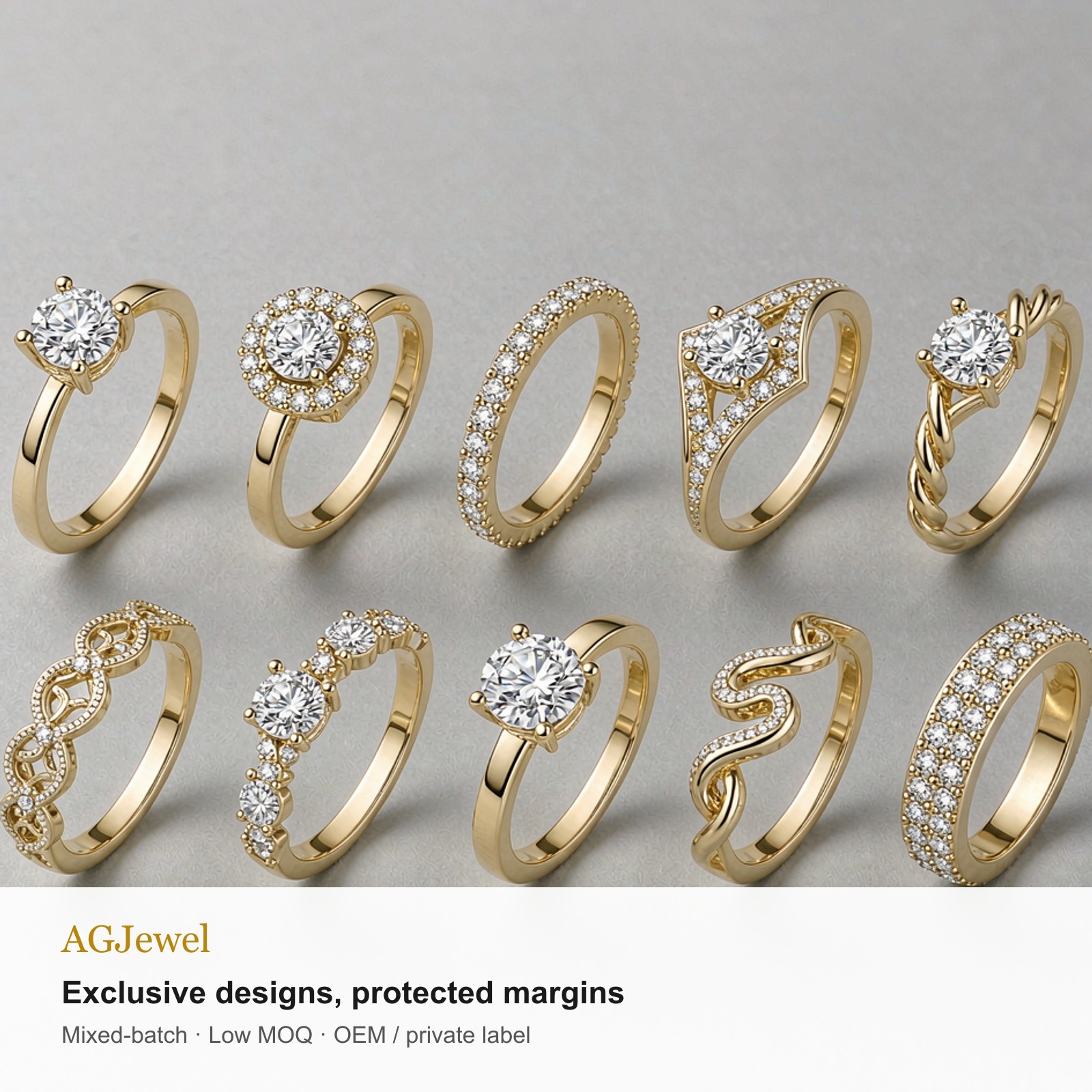
If a design can be found on every marketplace within a month of you stocking it, you have not bought a product — you have bought a price war. Buyers who order from open catalogues eventually learn the same lesson: the ring is identical everywhere, so the only thing left to compete on is the number on the tag.
There are two kinds of wholesale stock, and the difference is not quality. Commodity styles are openly available: any buyer can order them, any factory can quote them, and the price falls as more sellers pile in. Exclusive styles are held rather than merely sold — developed with a production partner, or covered by a special agency right, so they do not flow to the whole market at once.
That difference is what protects the retail price. When three shops within a few streets carry the same necklace, customers compare prices and everyone loses margin. When only one shop in that market carries it, the conversation moves from discount to value — sizing, finish, the story behind the piece. The buyer sets the price by what the piece is worth, not by what the shop next door is charging.
We are a trading supplier, not a factory, and that is exactly how exclusive access is possible. Working directly with a network of partner factories across different categories, we develop some styles with the factory and hold them for our buyers, and we hold special agency rights on others for defined regions or categories. The factories we partner with make the goods; what we bring is consolidated sourcing, and access that single-order buyers do not get.
Because real exclusivity is easy to claim and hard to prove, three questions separate it from marketing. Ask for the agency or authorisation document covering the style. Ask how many other buyers in your market already carry it. Ask whether the factory sells it openly to anyone who asks. A supplier that cannot answer those three plainly is describing a preference, not an arrangement.
Exclusivity is also not reserved for container-sized importers. With mixed-batch ordering from a low minimum per style, a boutique can take three to five exclusive styles alongside its regular lines, test sell-through for a season, and scale only the ones that hold their price. That is the practical use of it — not locking up a whole category, but protecting the pieces that carry your margin.
A simple way to start: choose the styles your market is being undercut on, check whether they can be held for you rather than bought by anyone, and test them in small quantity first. Our UK wholesale page sets out how mixed-batch orders, samples and agency enquiries work together, and the sample store lets you see the ranges before you commit to a single piece.