Volver al blog · Conocimiento de producto · 2026-11-20
Jewellery Plating Thickness Guide: What 0.5 vs 3 Microns Actually Means
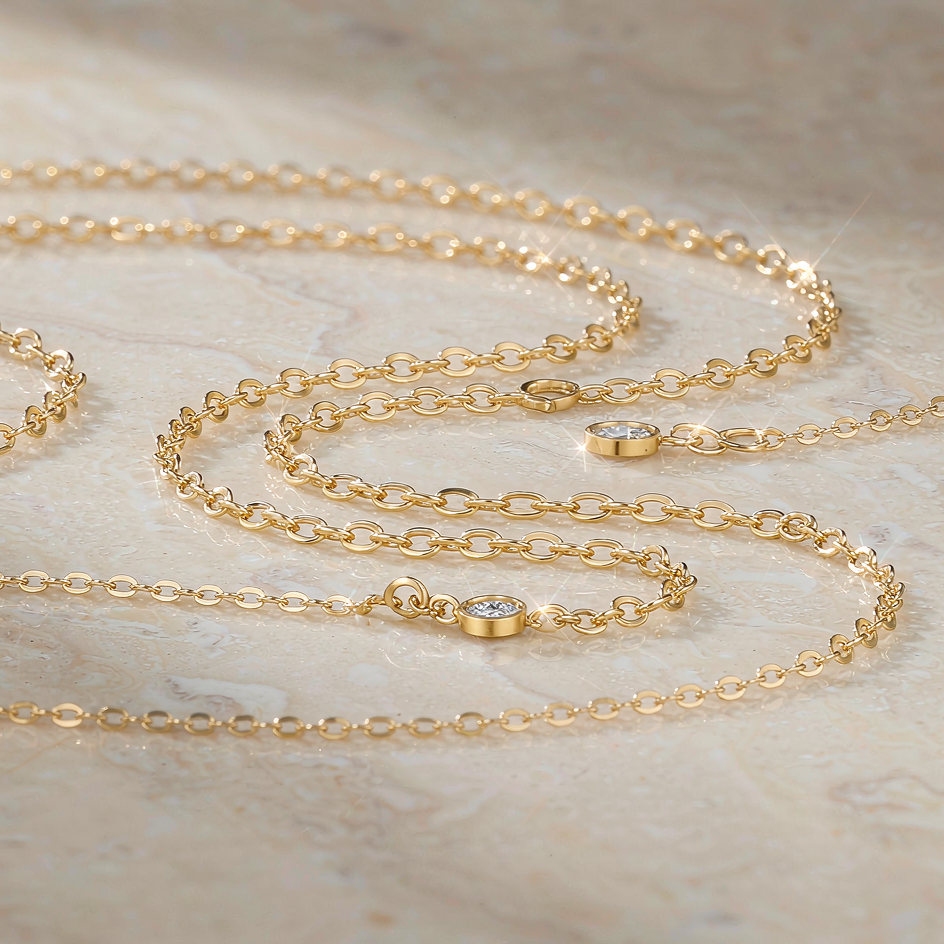
Two suppliers quote the same gold-plated necklace. One says the plating is "thick". The other gives you a number: 3 microns. The word is a feeling; the number is a fact you can hold both of them to. This guide explains what plating thickness actually does, so you can read a quote like a buyer instead of a gambler.
Plating thickness is measured in microns — one micron is one thousandth of a millimetre. To picture it: 0.5 microns is roughly 50 times thinner than a sheet of paper. In practice, costume jewellery plating runs from about 0.1 microns (flash plating, mostly colour) to 3 microns or more (heavy gold electroplate). Two pieces can look identical in a photo and behave completely differently after a month of wear.
What thickness changes is durability, not colour. Colour comes from the plating solution and the top coat, so a thin plate and a thick plate look the same on day one. The difference appears on day thirty: thin plating wears through to the base metal at high-friction points — ring shanks, clasp backs, chain links that rub. A customer who sees the base colour showing through reads it as a fault, and that returns as a complaint.
Chain links are the first place plating fails
— which is why a chain's plating spec matters more than a pendant's. When you compare quotes, ask each supplier the same question: what is the plating thickness on this item, in microns, and which layer is under the gold? The answer separates suppliers who run a documented process from those who are guessing.
There is a second question underneath the first: what is the strike layer? Almost all gold plating over copper or brass needs a nickel strike first so the gold can bond. That nickel layer is invisible but regulated — under REACH Annex XVII, nickel release from items in prolonged skin contact is limited, and from post assemblies in pierced ears the limit is stricter. So the plating stack is not just a quality decision; it is a compliance question. Ask for the plating stack, not just the top coat.
A practical buying rule: for everyday wear pieces that touch skin and water — rings, bracelets, chains — hold out for 1 micron or more, and 2–3 microns for anything positioned as a signature piece. For decorative or occasional pieces, 0.5 microns is a legitimate choice because the price reflects the shorter life. The point is to buy the thickness on purpose, not by default.
Write it into the order. A quote that says "gold plated" without a number gives you nothing to check when the goods arrive; a quote that says "3 microns gold over a nickel strike, per style" gives the factory something to defend and you something to verify. Ask for the number, get it in writing, and the word "thick" never has to be trusted again.